

The goal of The Human Body Project is to understand how the human anatomy relates to disease and future health outcomes. To accomplish this, we are developing and applying deep learning-based segmentation algorithms to divide the body portrayed in the cross-sectional images into different tissues and organs. All our algorithms are publicly available. We are working with our colleagues to establish the link between body characteristics extracted based on the segmentation and patient health indicators, such as surgery outcomes or the risk of future disease.
Below are some of the publicly available algorithms developed by our team:

SegmentAnyBone
SegmentAnyBone is a foundational model-based bone segmentation algorithm adapted from Segment Anything Model (SAM) for MRI scans. It can segment bones on the following 17 body parts:
Humerus | Thoracic Spine | Lumbar Spine | Ankle | Pelvis | Hand | Lower Leg | Shoulder | Chest | Arm | Elbow | Hip | Wrist | Thigh | Knee | Foot | Forearm
17
Body Locations
86.87
Avg. DSC
77.08
Avg. IoU
195
Volumes in Training Set
76
Volumes in Val. Set
35
Volumes in Test Set

SegmentAnyMuscle
A publicly available universal segmentation algorithm for muscles across a variety of MRI locations and sequences.
The data included images of the abdomen, hip, knee, shoulder, spine, and other body locations. The MRI sequences included T1, DIXON, T2, VIBE, and others.
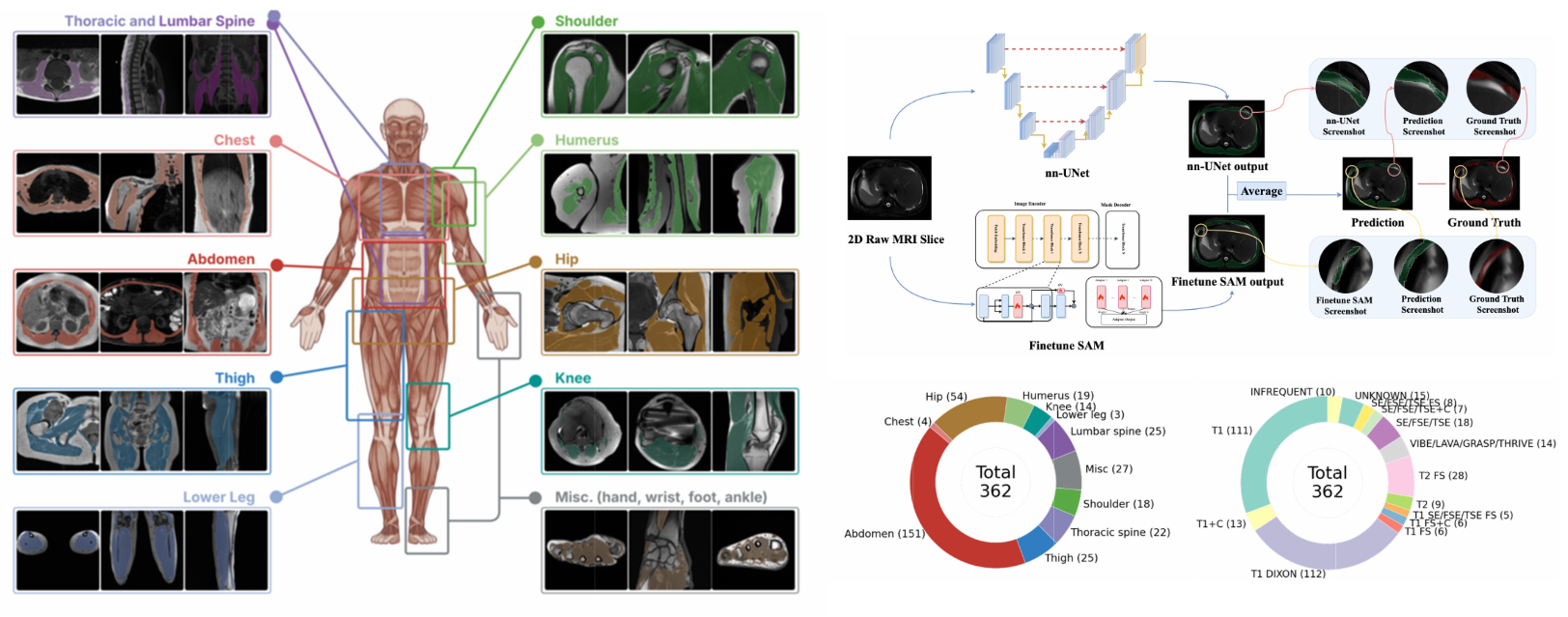
11
Body Locations
362
MRI Exams
160
Patients
19
MRI Sequences
88.45
DSC
93.15
HSS
BodyCompNet
A fully automated segmentation algorithm that identifies (1) muscles, (2) subcutaneous fat, (3) visceral fat, and (4) intermuscular fat in Computed Tomography for Comprehensive Body Composition Analysis
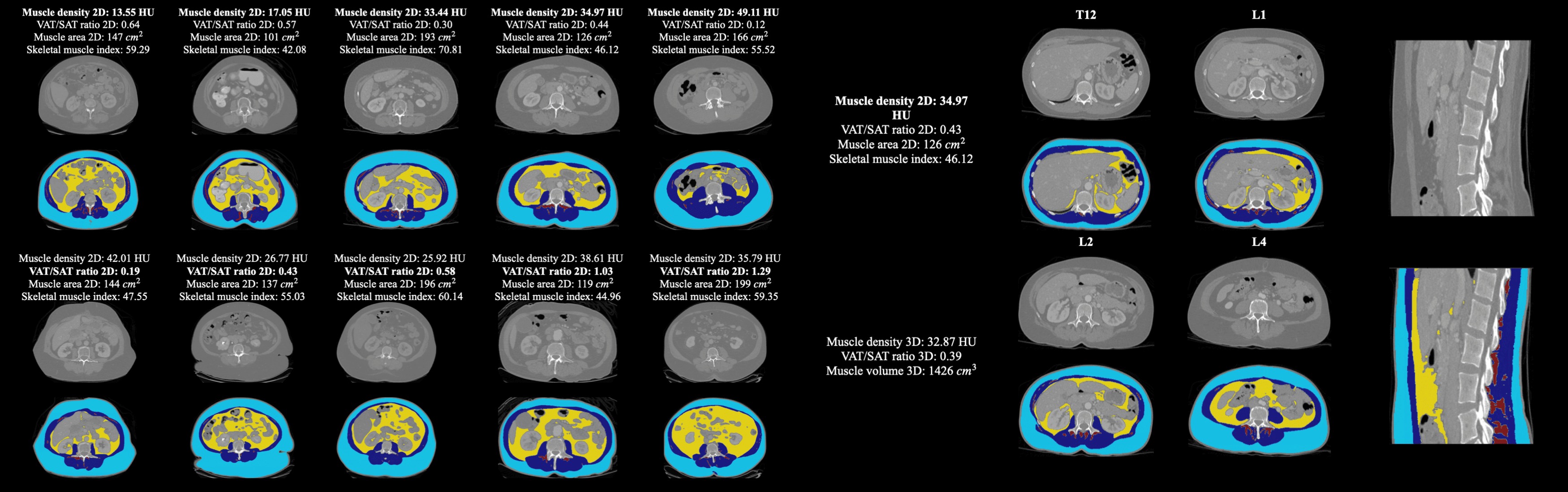
483
Patients
89.7
DSC for Muscle
92.4
DSC for SAT
91.05
Avg. DSC
1863
Slices in Training Set
636
Slices in Test Set
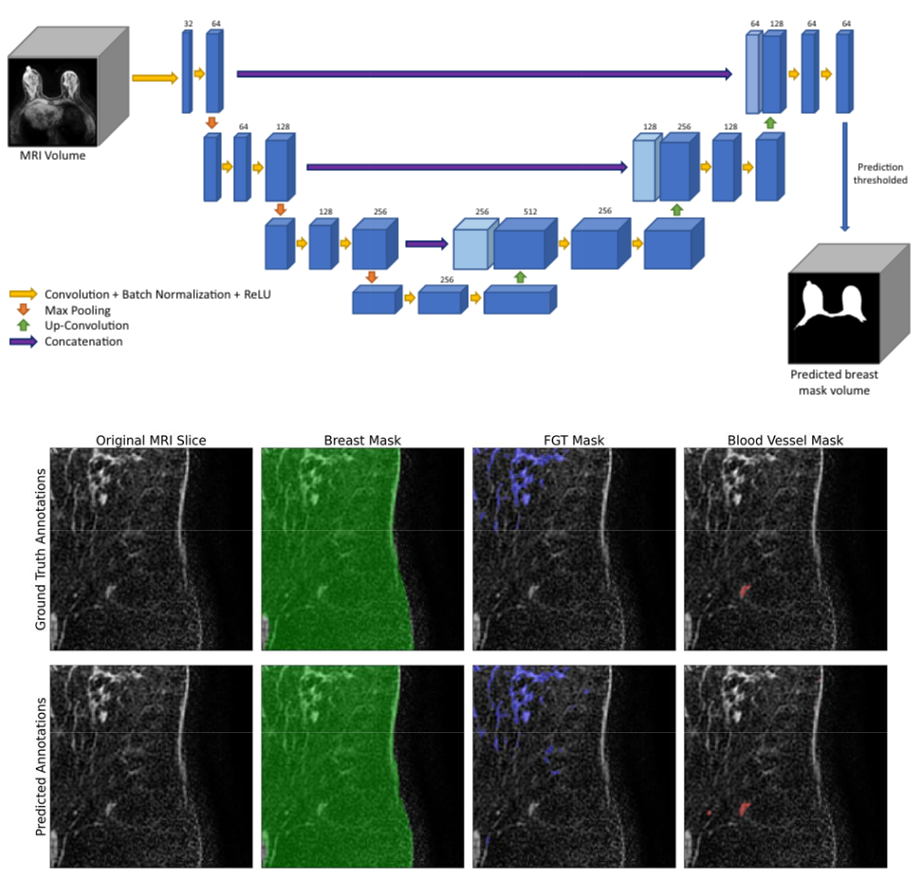
100
Patients
0.65
DSC for Blood Vessel
0.92
DSC for Breast
0.86
DSC for FGT